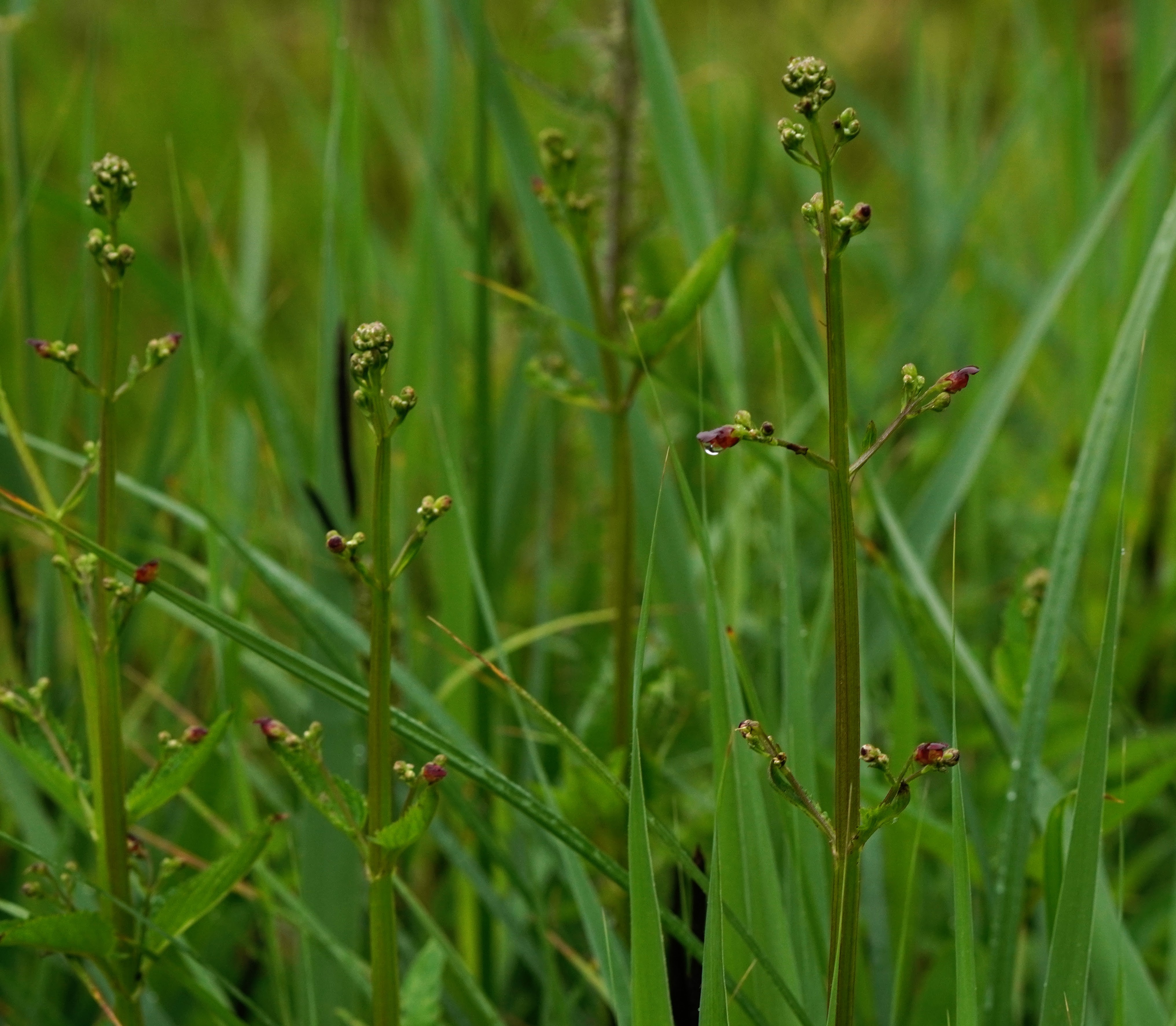
Showing posts with label Marsh Lousewort. Show all posts

Sunday, July 14, 2024

7 July 2024

I played a few times this week.  Nothing particularly unusual around the estate at the moment.  The Spotted Flycatchers are still about around the 9th Blue, but not much else.  One thing of note at the moment is the large number of Mallards on the pond on the 4th Blue.  I counted 20, including this white one, trying rather unconvincingly to conceal itself among the reeds.

Mallard [4th Blue]

I see Feral Pigeons flying over from time to time, but have not seen one on the course until now.  This one was very tame and was feeding on seeds on the 8th on the Green.  Judging by the tags, this one looks like a racing pigeon.  These are actually descended from Rock Doves, which inhabited cliffs before moving to towns and cities for a ready supply of food.  You can still find wild Rock Doves in Scotland and Northern Ireland and their descendants in any urban environment.

Feral Pigeon [8th Green]

Whilst many of the flowers are starting to go over, you can still see a few rarities in Two Pine Fen on the 4th Green/16th Red.  Marsh Lousewort has recently been reintroduced in an attempt to restore the habitat here and at Boundary Fen.  One plant that has benefited is Marsh Helleborine, which is arguably the most attractive of the orchids to be found at Frilford.

Marsh Helleborine Epipactis palustris [16th Red]

Marsh Lousewort Pedicularis palustris [4th Green]

Found this Common Cockchafer wandering across the 14th fairway.  They are more numerous in early summer, hence there other name 'May Bug'.

Common Cockchafer Melolontha melolontha [14th Blue]


Saturday, July 1, 2023

1 July 2023

I put on my wellies on for a wade around Boundary Fen this afternoon.  Among the many insects there were large numbers of Large and Small Skippers.  I presume that Large Skippers are slightly the larger but it is not easy to tell.  More reliable distinguishing features are the patterning on their wings, whereas Small Skippers are a more uniform orange colour.

Small Skipper Thymelicus sylvestris [Boundary Fen]

Large Skipper Ochlodes sylvanus [Boundary Fen]

Other butterflies around included Marbled White, Ringlet, Red Admiral, Comma and Large White.

Ringlet Aphantopus hyperantus [Boundary Fen]

Comma Polygonia c-album [Boundary Fen]

The Marsh Lousewort has spread rapidly since being introduced four or five years ago and is an important plant in the ecosystem here.

Marsh Lousewort Pedicularis palustris [Boundary Fen]

Rather more delicate is Bog Pimpernel, which grows in large quantities in Boundary Fen and has tiny, but very ornate pink flowers.

Bog Pimpernel Anagallis tenella [Boundary Fen]

I played a few holes around the Green course afterwards and came across this Wild Onion, one of several in the long grass to the left of the path near the 16th tee.

Wild Onion Allium viniale [16th Green]


Sunday, June 20, 2021

20 June 2021


Put my wellies on this morning to have a close look at Boundary Fen - the area to the left of the 13th on the Red.  A lot of work has been done on this area by Abingdon Green Gym under the guidance of English nature.  For a number of years the area has been overgrown with reed, giving little chance for other plants to flourish.  

You can see now that large tracts of reeds have been cut down.


It is clear that this is having a positive effect on biodiversity.  Marsh Lousewort is seen as one of the key plants in this ecosystem and is growing strongly in various spots.

Marsh Lousewort Pedicularis palustris [Boundary Fen]

Another uncommon plant thriving here is Bog Pimpernel.  I've looked for this elsewhere in the ditches on the Green without finding any, but there is quite a lot in this area.  It's small pink flowers only tend to open in full sun.
Bog Pimpernel Anagallis tenella [Boundary Fen]

Other plants growing here include:

Skullcap Scutellaria galericulata [Boundary Fen]

Water Figwort Scrophularia auriculata [Boundary Fen]

Greater Birdsfoot Trefoil Lotus pedunculatus [Boundary Fen]

Meadow Vetchling Lathyrus pratensis [Boundary Fen]

Creeping Thistle Cirsium arvense [Boundary Fen]

Marsh Bedstraw also grows here and is one of a number of Bedstraws on the course at the moment.  Heath Bedstraw is common on the Green course and has denser flowers.  Lady's Bedstraw is yellow and grows on the Red course and on the Doghouse range.  Cleavers is the most common and is the one stuck to your clothes after a trip to the deep rough.

Marsh Bedstraw Galium palustre [Boundary Fen]

Heath Bedstraw Galium saxatile [15th Green]

Lady's Bedstraw Galium verum [15th Red]

Cleavers Galium aparine [Boundary Fen]

On the area to the left of the 13th Red you can find both White and Black Bryony scrambling over their surrounding vegetation.

White Bryony Bryonia dioica [13th Red]

Black Bryony Tamus communis [13th Red]

In the wood behind the fen I came across Tutsan, a shrubby member of the Hypericum family.

Tutsan Hypericum androsaemum [13th Red]

In the same family, but a fraction of the size is Trailing St John's-wort, which you can find in the rough near the green on the 3rd Green.

Trailing St John's Wort Hypericum humisusum [3rd Green]

Finally, at the back of the 14th tee I came across a Large Skipper butterfly, the first one that I have seen at Frilford.

Large Skipper Ochlodes sylvanus [Boundary Fen]