Showing posts with label Greylag Goose. Show all posts

Saturday, May 28, 2022

27 May 2022

There was a bit of commotion as I approached the 3rd Blue this morning.  A juvenile Grey Heron was being mobbed by a couple of Black-headed Gulls.  It eventually gave up and flew off towards the 1st.

Grey Heron and Black-headed Gull [3rd Blue]

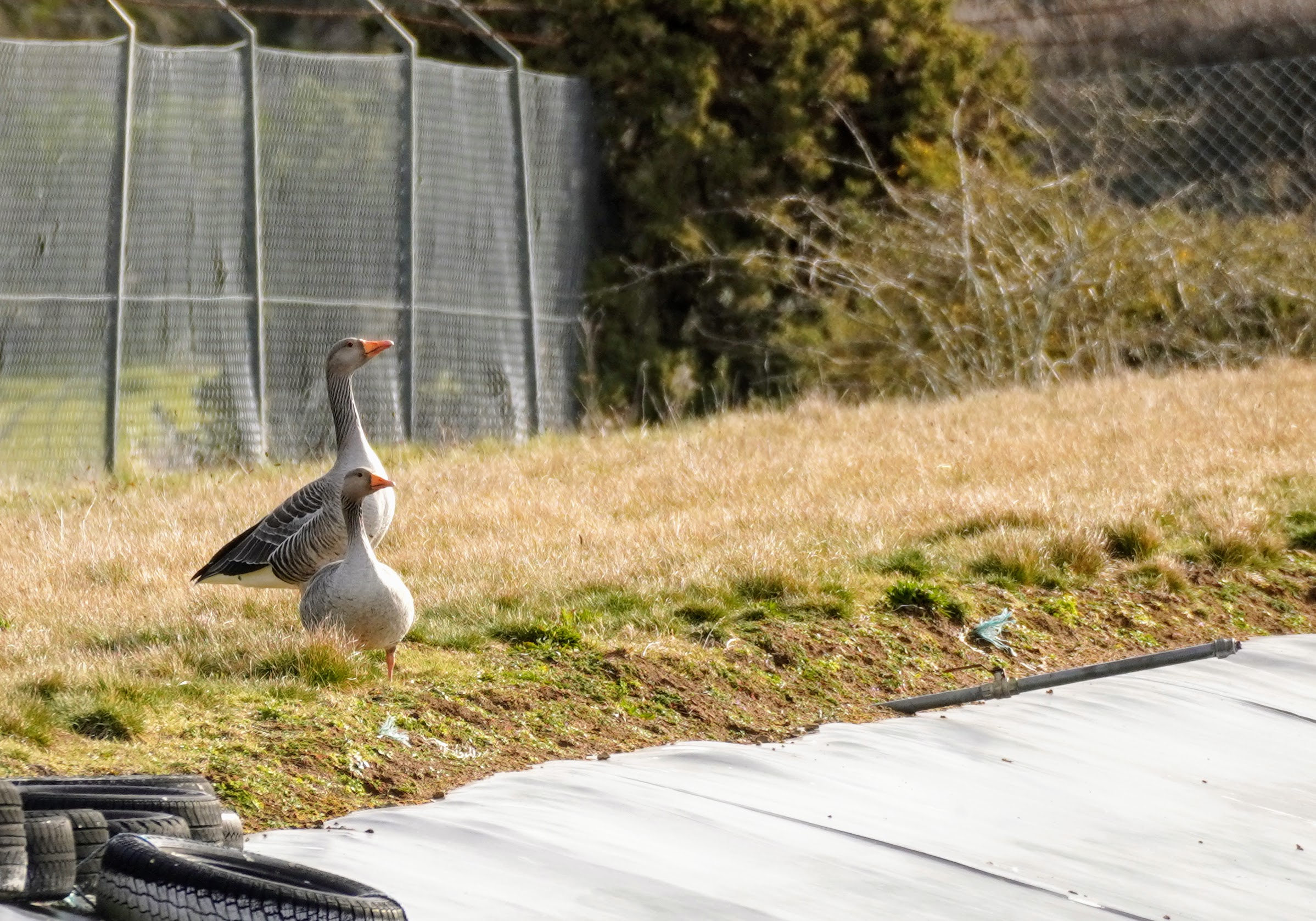
A pair of Greylag Geese is regularly feeding on the grass around the 4th and 8th on the Blue course at the moment.  This evening they were resting by the pond on the 4th, seemingly unconcerned by my presence.

Greylag Geese [4th Blue]

A few more dragonflies are emerging around the ponds.  This Four-spotted chaser was on reeds to the left of the 6th Blue.
Four-spotted Chaser Libellula quadrimaculata [6th Blue]

An army of Common Spotted Orchids has started to emerge in Two Pine fen.  These are the most commonly spotted orchids around the course and the lower petal has 3 fairly evenly sized lower petal lobes.

Common Spotted Orchids Dactylorhiza fuchsii [16th Red]


Sunday, April 3, 2022

2 April 2022


Some sunny weather over the last couple of weeks and a definite shift towards spring.  The Redwings seem to have disappeared by now, although I did see some late Fieldfares flying over earlier this morning.  The resident thrushes are in good voice though.  This Song Thrush sings regularly from near the 3rd tee on the Blue and Mistle Thrushes are abundant on the fairways.

Song Thrush [3rd Blue]

Mistle Thush [4th Blue]

It is good to see some water birds returning to the reservoir.  These Tufted Duck were part of a flock on 5 this morning.  There have also been a pair of Coot quite regularly.

Tufted Ducks [Reservoir]

A few different geese are around the pond on the 3rd Blue.  These Greylag Geese were near the water's edge earlier in the week.

Greylag Geese [3rd Blue]

But these Canada Geese were clearly more experienced and knew the safest place to be whilst I lined up my tee shot.

Canada Geese [3rd Blue]

The large flock of visiting Chaffinches and Bramblings has moved on, but elsewhere on the course there are large flocks of Linnets along with other residents such as Greenfinches and Goldfinches - particularly around the 14th and 15th on the Red.

Greenfinch [15th Red]

Magpies are fairly frequent around the estate, but around the 4th and 5th on the Blue some quite large gatherings appear.  I have seen 8 or 9 together.  This morning there was a flock of 4 around the 4th green.

Magpies [4th Blue]

Whilst playing the 18th on the Green earlier in the week I had a very brief glimpse through my binoculars of a Firecrest high in the trees to the left of the tee.  It's the first time that I've seen one on the course although I know that other people have spotted them.

There were a couple of Kingfishers around the 1st on the Blue this morning - by the pond and the stream behind.

Kingfisher [1st Blue]

.. and numerous Treecreepers on all three courses.

Treecreeper [3rd Blue]

Lots of flowers are starting to appear.  Wavy Bittercress is one that I didn't spot last year and which is growing in great quantities in Boundary Fen.

Wavy Bittercress Cardamine flexuosa [13th Red]

Various violets are also brightening shady areas.

Common Dog Violet Viola riviniana [13th Red]


Sunday, July 11, 2021

12 July 2021


The rough around the course is a fantastic natural habitat this year, particularly for flowers - but more challenging for golfers.  There are lots of pink flowers out at the moment, quite a few of which are members of the thistle family:

Spear Thistle Cirsium vulgare [Doghouse range]

Common Knapweed Centaurea nigra [Doghouse range]

Greater Knapweed Centaurea scabiosa [6th Red]

Teasel Dipsacus fulonum [3rd Blue]

Common Centaury Centaurium erythraea [5th Red]

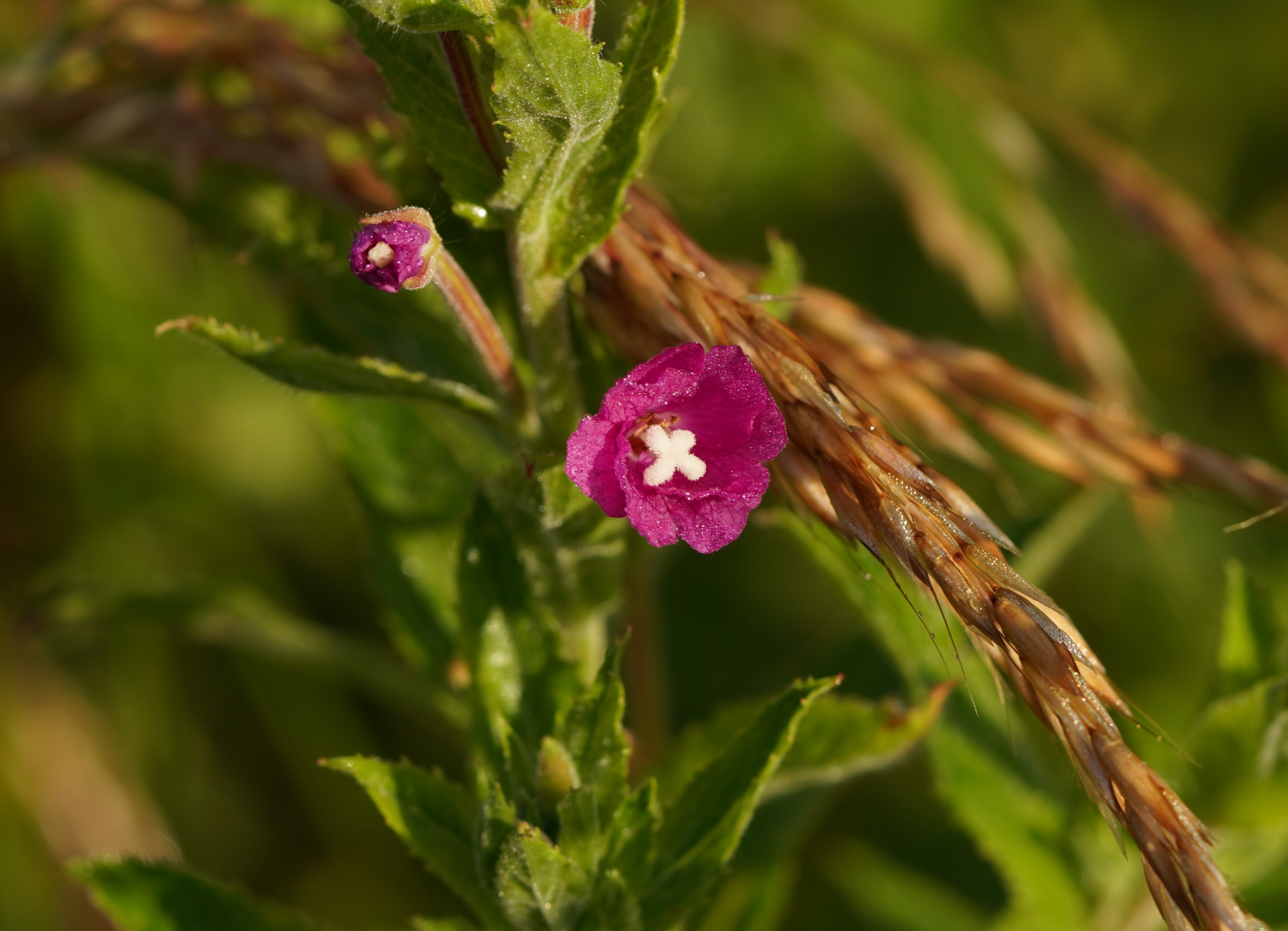
Great Willowherb Epilobium hirsutum [3rd Blue]

There are also various types of umbellifers in various places.  Two very similar ones growing in water are Lesser Water Parsnip, which grows in the stream on the 4th Green and Fool's Watercress, which grows in the ditch on the 2nd Blue

Lesser Water Parsnip Berula erecta [4th Green]


Fool's Watercress Apium nodiflorum [2nd Blue]

Rather yellow and growing on the 7th Green is Wild Parsnip.

Wild Parsnip Pastinaca sativa [7th Green]

The most common butterflies this weekend were Marbled White, this one has settled on a Musk Thistle.

Marbled White Melanargia galathea  [Doghouse range]

Ringlets were also very common in the rough.  Their dark colouring means that they warm up more quickly than most butterflies and can fly in cloudier conditions.

Ringlet Aphantopus hyperantus [12th Green]

There were a couple of Cormorants on the reservoir.  Cormorants feathers are less water-repellent than most birds so that their buoyancy is reduced, enabling them to swim more easily - hence the need to hold them out to dry in this characteristic posture.

Cormorant [Reservoir]

Also beside the reservoir was this large gaggle of Greylag Geese.

Greylag Geese [Reservoir]

Sunday, May 16, 2021

16 May 2021


It is pretty wet underfoot at the moment with all of the recent rain.  This may explain why a lot of the waterfowl have been exploring the fairways in the last few days.

These three were part of a mixed flock about a dozen Greylag Geese and Canada Geese that were around the 3rd fairway Red.

Greylag Goose and Canada Geese [3rd Red]

Yesterday evening these male Mallards were in front of the 2nd green on the Blue.

Mallard [2nd Blue]

This morning I was surprised to see these two Gadwall wandering about in front of the 4th green on the Blue.

Gadwall [4th Blue]

It is getting tougher to spot new species of birds for the Frilford list, but this morning I found two Grey Partridges.  They were in the field to the left of the 6th tee on the Blue.  They have declined significantly in the last forty years and it is now quite uncommon to see one.  Their relative, the Red-legged Partridge is much more common.

Grey Partridges [6th Blue]

Near the 14th tee on the Blue I had a nice view of this Brown Hare, which didn't spot me until it was almost at my feet.


On the Doghouse range I heard a Lesser Whitethroat singing in the far north-east corner.  There were also a couple more plants to see.  Hound's-tongue is fairly scarce nationally, but quite common in our area.  There was also a patch in front of the 16th tee Blue last year.  Cornsalad is a tiny plant, but is fairly common - as is White Campion which can be found on all three courses.

Hound's-tongue Cynoglossum officinale [Doghouse range]

Cornsalad Valeriana locusta [Doghouse range]

White Campion Silene latifolia [Doghouse range]


Saturday, March 27, 2021

27 March 2021


Last weekend of lockdown, so had a long walk around all of the courses.  A couple more flowers to add to the list.  Field Mouse-ear is starting to flower on the edge of the 15th fairway on the Red.

Field Mouse-ear [15th Red]

Thale cress is a rather inconspicuous weed, but it is notable for being the first plant species to have its genome sequenced.

Thale Cress [5th Red]

I notice that the area to the right of the 10th tee on the Green is taped off.  I would imagine that this is to protect the Maiden Pink which grows there and which is one of the rarest plants on the course.  Look out for it from mid-June.  


There were 4 species of birds of prey on a thermal above the 17th Blue - Red Kite, Buzzard, Sparrowhawk and Peregrine.  The Peregrine was a long way up, but is just about identifiable from this heavily cropped image:

Peregrine [17th Blue]

Lots of Crossbills about still.  I think that they must be nesting somewhere nearby as they are usually very early breeders.  This male was by the greenkeeper's hut on the Blue.  

Crossbill [16th Blue]

When feeding on pine cones they use their unusually shaped beak to prize apart to the cone and extract the seeds with their tongue.


4 Greylag Geese flew over the 4th on the Blue, including a white one at the back.


Otherwise I had distant views of the Kingfisher on the 1st/2nd/3rd of the Blue and the normal selection of common birds.

Woodpigeon [16th Blue]

Hedge Sparrow [3rd Blue]


Sunday, March 14, 2021

14 March 2021


Had a quick trip down to the 2nd on the Blue early this morning to have a look for the Kingfishers.  Having caught glimpses of them over the last week or so and spoken to the greenkeepers, the most reliable place to see them is the stream in front of the green on this hole.

Kingfisher [2nd Blue]
It is always a privilege to see Kingfishers. There was a pair today, moving between the hazard posts and in and out of the stream and then onto the bridge.
Kingfisher [2nd Blue]
In the bottom photo you can see the iridescent feathers on the back that provides the flash of turquoise when a Kingfisher flies past - as you can see at the end of the brief video below.


A pair of Grey Wagtails also frequent this area.  Here they are on top of the same bridge.  

Grey Wagtails [2nd Blue]

There really are a lot of birds in this area of the course, whilst watching the Kingfishers I also saw a pair of Moorhens, Goldfinches and Siskins feeding on the fallen seeds, Mistle Thrushes, Redwings and Blackbirds feeding on the fairway, a Wren flying between the stream and its nest, a Great Tit singing and Green Woodpeckers flying across the fairway.
Great Tit [2nd Blue]

I had a quick look at the reservoir on the way back to the car park and there were a pair of Greylag Geese in addition to 5 noisy Canada Geese.