Showing posts with label Harebell. Show all posts

Monday, July 24, 2023

22 July 2023

 Had a few walks around the course over the last few days.  Things are fairly quiet wildlife wise. There are lots of gulls on the fairways and I have seen and heard the Oystercatchers flying over a few times.  This juvenile Grey Heron tends to stalk the pond on the 3rd Blue in the early morning.

Grey Heron [3rd Blue]

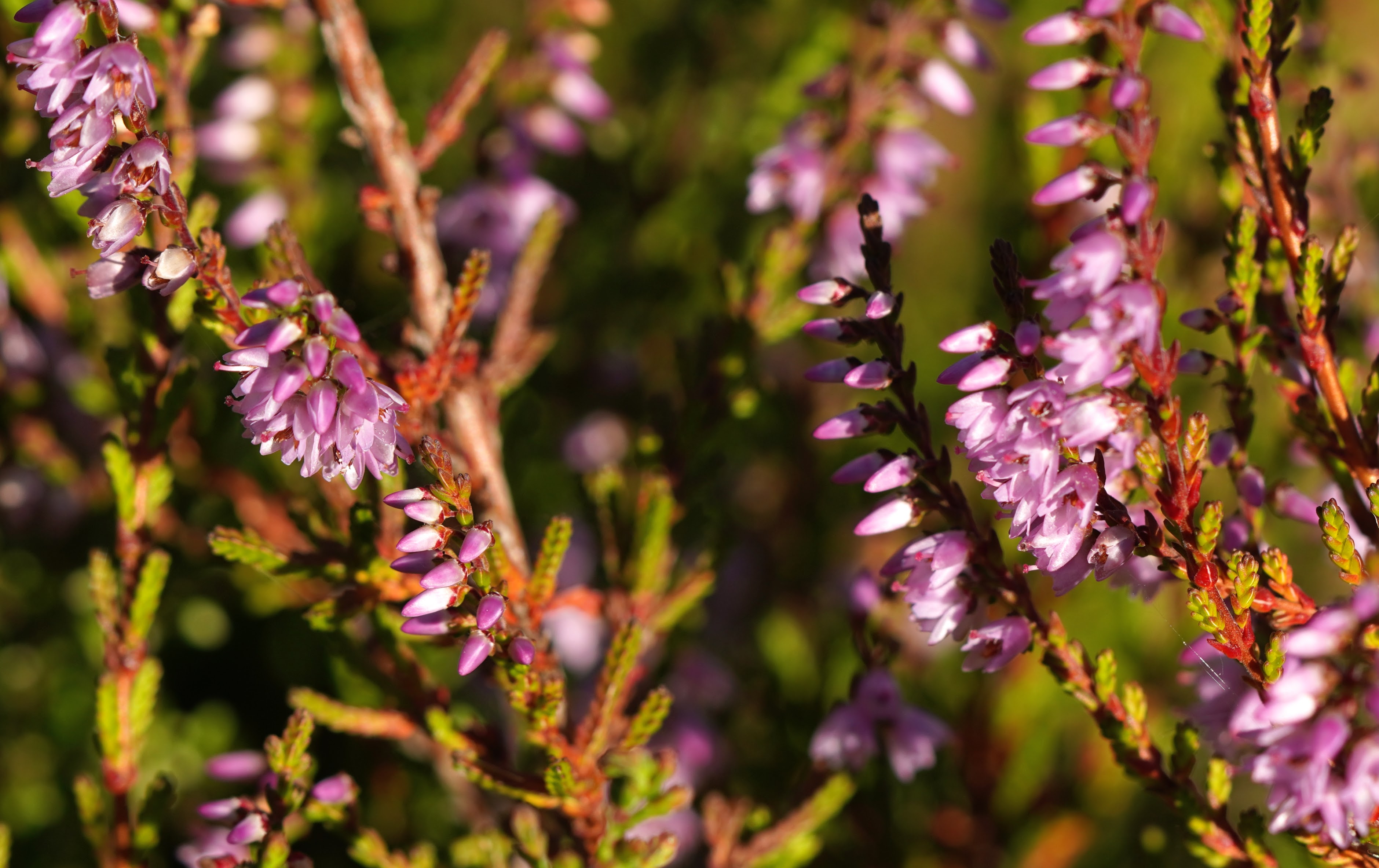
Most of the Orchids have now gone over, but there is still plenty of colour in the rough.  One of the highlights at this time of year are the delicate but prolific Harebells on the Red course.

Harebells Campanula rotundifolia [12th Red]

It is a good time of year for butterflies.  Meadow Browns and Small Skippers are very common in the rough, as are Green-veined Whites.  This one was waiting for the morning dew on its wings to evaporate before being able to fly around.

Green-veined White Pieris napi [12th Red]

The Holly Blue has bright blue upperwing and a paler underwing with small black spots. They are quite common around the estate.  This one was feeding on the path by the reservoir.

Holly Blue Celastrina argiolus [4th Red]


Saturday, August 6, 2022

6 August 2022


I had a walk around the courses first thing this morning.  Wherever the grass hadn't been watered it was a rather crispy brown.  Nothing too unusual bird-wise, other than a Hobby which I saw very briefly behind the sixth green on the Blue course.  The family of Spotted Flycatchers were in their usual spot on the left of the 4th Blue.  Another family of 5 or 6 birds was on the 13th Red.

Spotted Flycatcher [4th Blue]
Spotted Flycatcher (juvenile) [13th Red]
Lots of other common birds about, particularly Long-tailed Tits, which seem to appear in waves of 20 or 30 birds, often interspersed with Treecreepers, Chiffchaffs, Goldcrests and Blue Tits.

Long-tailed Tit [4th Blue]

There also a few species of dragonflies and butterflies about.  This Black-tailed Skimmer was on the 3rd Blue.
Black-tailed Skimmer  Orthetrum cancellatum [3rd Blue]

Brown Argus is a fairly common butterfly found on calcareous grassland, so it was no surprise to find several on the Doghouse practice area.  

Brown Argus Aricia agestis [Doghouse practice ground]
On the 5th Blue I came across this Common Wave moth feeding on a Creeping Thistle.
Common Wave Cabera exanthemata [5th Blue]
There are also plenty of late-flowering plants around the courses - providing splashes of colour among the brown grass.
Common Restharrow Ononis repens [Doghouse practice ground]

Soapwort Saponaria officinalis [14th Red]

Harebell Campanula rotundifolia [15th Red]


Thursday, July 29, 2021

29 July 2021

First time that I have been up to the club for a week or so after travelling to various golf events with Luke.  There were a couple of new dragonflies about.  The first is a Common Darter, which is fairly common around the course at the moment.

Common Darter Sympetrum striolatum [12th Blue]

The second is a Banded Demoiselle, which has a characteristic dark patch in the middle of its wings.  There were quite a few in the stream along the 2nd on the Blue.

Banded Demoiselle Calopteryx splendens [2nd Blue]

In Boundary Fen I came across this enormous caterpillar.  If all goes well it will turn into an Elephant Hawk Moth.

Elephant Hawk Moth Deilephila elpenor [Boundary Fen]

The heather on the Red and Green courses is starting to flower.  If you look closely you will see two different types.  Common Heather is the most abundant, but mixed in with this there is some Bell Heather, with somewhat larger bell shaped flowers.

Common Heather Calluna vulgaris [15th Red]

Gatekeeper Pyronia tithonus on Bell Heather Erica cineria [15th Red]

Other flowers around the course at the moment include:

Water Mint Mentha aquatica [3rd Blue]

Harebells Campanula rotundifolia [4th Red]

Purple Loosetrife Lythrum salicaria [9th Blue]

Square-stalked St. John's-wort Hypericum tetrapterum [18th Red]

There are also numerous small birds around the course at the moment, enjoying the large numbers of flies. I spent some time around the 3rd on the Blue with the course closed for maintenance and the area behind the green was teeming with Blue Tits, Great Tits, Long-tailed Tits, Chaffinches, Treecreepers, various warblers and at least 4 Spotted Flycatchers.

Spotted Flycatcher [3rd Blue]

Chiffchaff [3rd Blue]

Whitethroat [15th Red]

Tuesday, November 10, 2020

10 November 2020

Large numbers of Mistle Thrush and Redwing behind the 13th green on the Red.

Not much else of note bird-wise.  No sign of the Crossbills today.

A couple of rather lonely plants in flower:

Harebell Campanula rotundifolia [5th Red]

Musk Thistle  Carduus nutans [4th Red]

White Dead-Nettle Lamium album [12th Red]

I found what I thought was a rather interesting looking fungus growing on nettles on the footpath between the 4th and 5th on the Red.  On submitting to the UK fungi forum, it turns out that it is actually a type of mould rather than a fungus.   

Mucilago crustacea [5th Red]

Thanks to Mike for replying

'... your find isn't actually a fungus, it's a myxomycete (slime mould), and in this case, it's one of the few myxo's which are readily and easily identifiable without microscopy - from "macro" characteristics alone.

Your find is absolutely typical of Mucilago crustacea, a myxo which always grows on living herbaceous material -primarily grasses, but also on nettles, rushes, etc. etc. - where it will always be found like this, quite low to the ground.'

There is also plenty of genuine fungi about.

Common Puffball - Lycoperdon perlatum [5th Red]

Snowy waxcap -  Cuphophyllus virgineus [5th Red]