Showing posts with label Cinnabar. Show all posts

Sunday, June 29, 2025

29 June 2025


Scorching weather at the weekend, so I ventured out in the early morning and late evening.  There are several pairs of Green Woodpeckers nesting around the course at the moment and both juveniles and adults are easy to spot.  This one gave some nice views around the 2nd green and provided some consolation to the seven shots I had taken to play the hole.

Green Woodpecker [2nd Blue]

Meadowsweet Filipendula ulmaria [3rd Blue]

In the the back of the 8th green and around the 10th tee there were a lot of birds enjoying the multitudes of flies, including Blackcaps, Blue Tits and Chiffchaffs.  This Nuthatch was searching for grubs and beetles on the tree trunks.
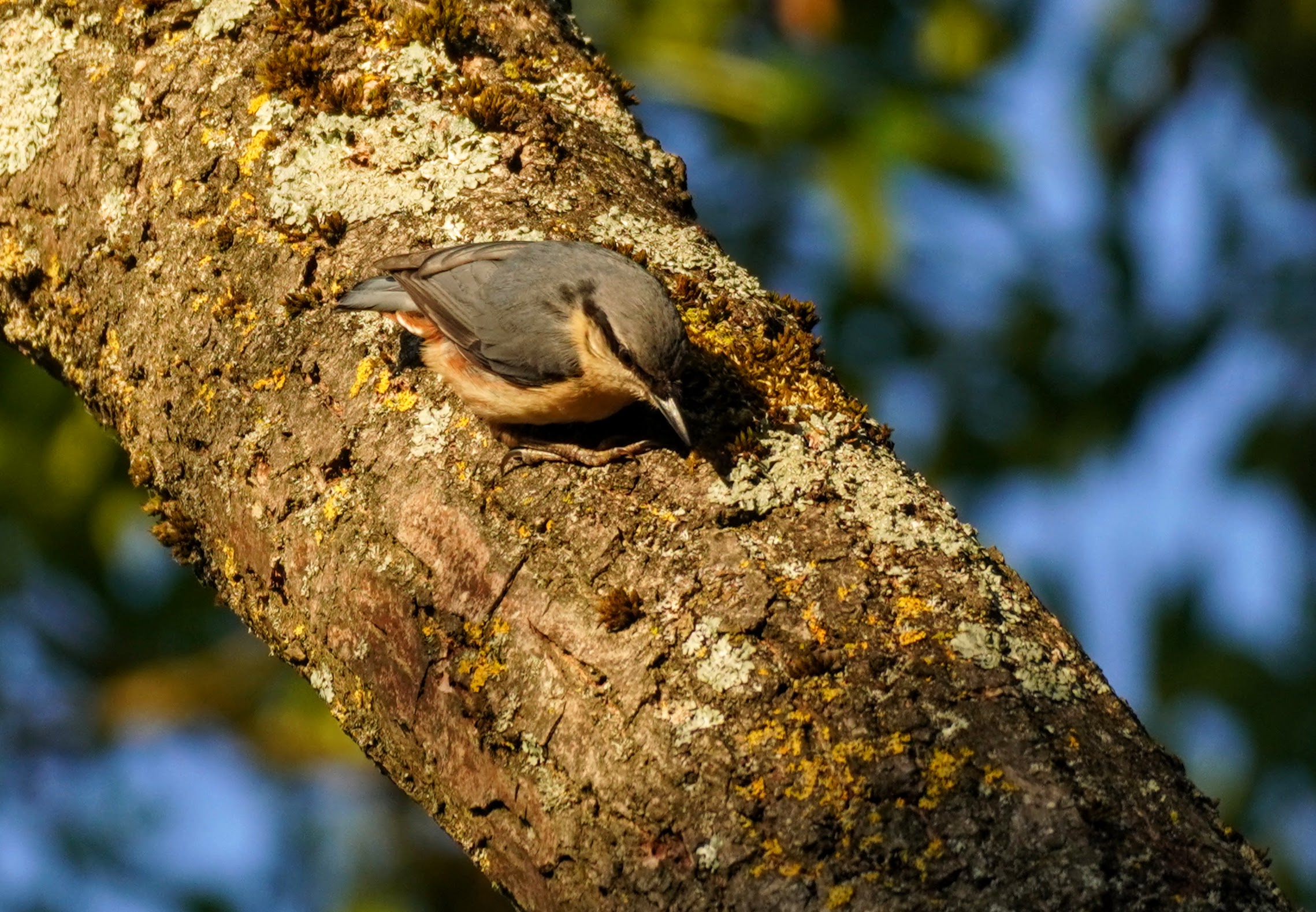
Nuthatch [8th Blue]

There are plenty of flowers out at the moment.  Meadowsweet grows in various areas of the estate, including on the left of the 18th.  It has an almond scent and it was once widely used as a sweetener in food and mead - hence the name.

Cinnabar moth caterpillars are easy to spot with their black and yellow colouring, which is also a warning to potential predators that they are toxic. This one was near the footpath on the 4th Red.

Cinnabar Moth Tyria jacobaeae [4th Red]

Wednesday, May 14, 2025

14 May 2025

 Had a walk around the estate today.  This year I have heard a Lesser Whitethroat on the course for the first time in a few years.  Its territory seems to be centred around the footpath to the left of the 5th on the Red course.  They are easy to hear, but virtually impossible to see or photograph as they generally stay hidden in bushes.  In several hours of trying, this is the best picture that I managed to get.

Lesser Whitethroat [5th Red]

There also Linnets nesting in the gorse in this area.  They are a little less secretive and there are lots of them.

Linnet [5th Red]

A little lower down the footpath you can find a patch of Heath Dog Violets, one of Frilford's speciality flowers.  They are a bit bluer than the more common violets and have a yellow spur.

Heath Dog Violet Viola canina [4th Red]

Cinnabar moths are quite common on the courses at this time of year.  They have distinctive red colouring and fly during the day.  Later in the year, look out for their black and yellow caterpillars.  This one was on the grass on the 1st Blue.

Cinnabar  Tyria jacobaeae [1st Blue]

Also on the 1st Blue I came across this freshwater mussel shell.  I suspect that this may have been eaten by an otter and left on the fairway.

Freshwater Mussel [1st Blue]


Sunday, June 2, 2024

2 June 2024

 I had a long walk around the Red and Blue course this morning.  I came across several Cinnabar moths between the 13th and 15th Red.  I often see them here - they are easy to spot with their bright red underwing, particularly as they are day-flying.

Cinnabar Tyria jacobaeae [15th Red]

Dragonflies are much more evident on the course now that full summer is approaching.  This female Broad-bodied Chaser was between the 4th and 5th on the Red.  The first time that I have seen one of these at Frilford.  Notice the broad, flat abdomen, hence the name.

Broad-bodied Chaser Libellula depressa [4th Red]

 The distinctive small blue flowers and fleshy leaves of Brooklime can be found in the stream on the 18th Red.  I've not seen this here before - it also grows in the ditches on the Blue course.

Brooklime Veronica beccabunga [18th Red]

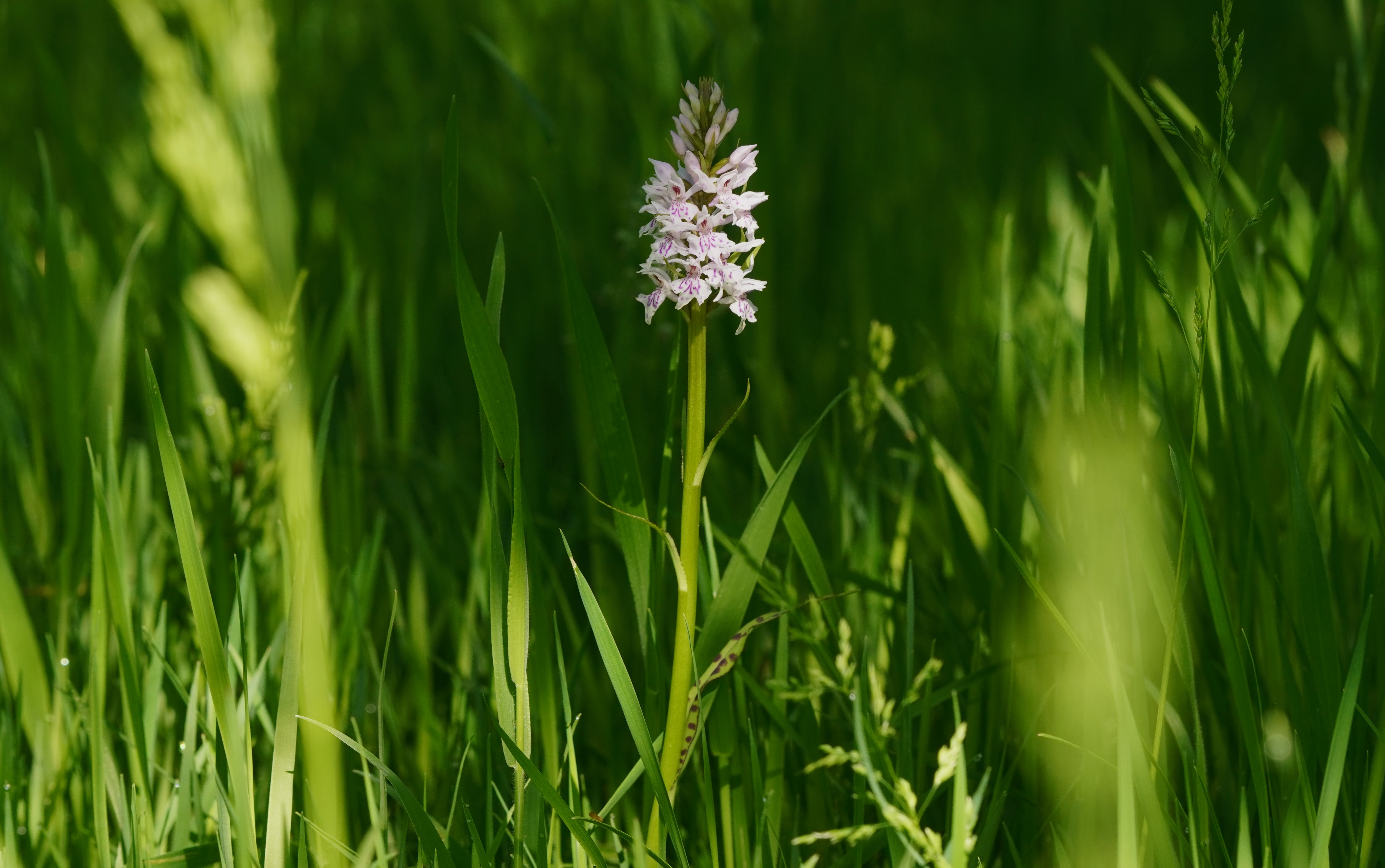
A few of the orchid species are flowering now.  I have seen Pyramidal Orchids, various Marsh Orchids and Common Spotted.  This Common Spotted Orchid was growing on the right of the 18th Red.

Common Spotted Orchid Dactylorhiza fuchsii [18th Red]


Tuesday, June 20, 2023

20 June 2023


Viper's Bugloss Echium vulgare [15th Blue]
I have had a few visits to the course over the last week or so.  One of the most spectacular sights at the moment is the Viper's Bugloss which has colonised the area between the 13th and 15th on the Red, which was cleared last year.  Other than Bluebells carpeting a spring wood I can't think of many comparable displays of floral blue.

Cinnabar  Tyria jacobaeae [15th Red]
Not far away on the 15th Red was this Cinnabar moth.  It is a day-flying moth that can often be found in this area.

Common Broomrape Orobanche minor [18th Blue]

At the back of the 18th on the Blue was this rather odd-looking brown plant - a Common Broomrape which is parasitic on members of the pea family.  

Whitethroat [7th Blue]

After the excitement of the Oystercatcher and Egyptian Goose over the last couple of weeks, it was back to more familiar birds.  Whitethroats are very common on the course but can be difficult to spot.  Sometimes their calls give them away - this one is giving an alarm call.

House Sparrow [Reservoir]

This House Sparrow was one of two or three that breed around the reservoir.


Saturday, June 12, 2021

12 June 2021

Baking hot day today.  Lots of dragonflies around today - I was able to spot 5 species:

Beautiful Demoiselle - The ones with dark wings that are common on the first few holes of Blue.

Azure Damselfly - Small blue Damselfly.  Lots around the water on the Blue.

Black-tailed Skimmer - The males have a blue body and the females are brown.  These are common in the area to the left of the 15th Red.

Emporer Dragonfly - Britain's bulkiest Dragonfly, with a blue and green body.  On the pond to the left of the 4th Blue and in the rough on the Red.

Four-spotted Chaser - Brown Dragonfly with spots on its wings - lots of them around the pond on the 4th Blue.

Black-tailed Skimmer (male) Orthetrum cancellatum [15th Red]

Black-tailed Skimmer (female) Orthetrum cancellatum [15th Red]

Emperor Dragonfly Anax imperator [15th Red]

Four spotted Chaser Libellula quadrimaculata [4th Blue]

Azure Damselfly Coenagrion puella [1st Blue]

Beautiful Demoiselle (male) Calopteryx virgo [1st Blue]

I visited the water a couple of times on the first few holes of the Blue, allowing me to spot some new flowers for the year:

White Waterlily Nymphaea alba [1st Blue]

Water Forget-me-not Myosotit scorpioides [1st Blue]

Celery-leaved Buttercup Ranunculus sceleratus [1st Blue]

Brooklime Veronica Beccabunga [4th Blue]

A group of baby warblers, this time Blackcaps - to the left of the 13th Red. Here is one of them..

Blackcap [13th Red]

There were a couple of Kestrels hunting over the 9th Blue.

Kestrel [9th Blue]

On the 15th Red was another black and crimson day-flying moth, the Cinnabar.

Cinnabar Tyria Jacobaeae [15th Red]