Beautiful sunny still morning today. I had a walk around parts of the Blue and Red course. An Egyptian Goose stopped off at the reservoir, a new addition to the Frilford list.
Egyptian Goose [Reservoir]
As its name suggests, the Egyptian Goose is an introduced species, first recorded in England in 1678, but is now fairly common, particularly in urban parks.
Trickier to spot, but easier to hear, there are still plenty of warblers singing and feeding. This Blackcap is usually singing near the bridge near the 1st Blue, although is tricky to spot.
Blackcap [1st Blue]
Also easier to hear that see are the various Whitethroats nesting around the estate. This one was skulking in the gorse to the left of the 5th Red.
Whitethroat [5th Red]
Willow Warblers seem to be the opposite. I have scarcely heard one this year, but always seem to find a lot feeding. This one is fairly regular in the gorse between the 4th and 5th Red.
Willow Warbler [4th Red]
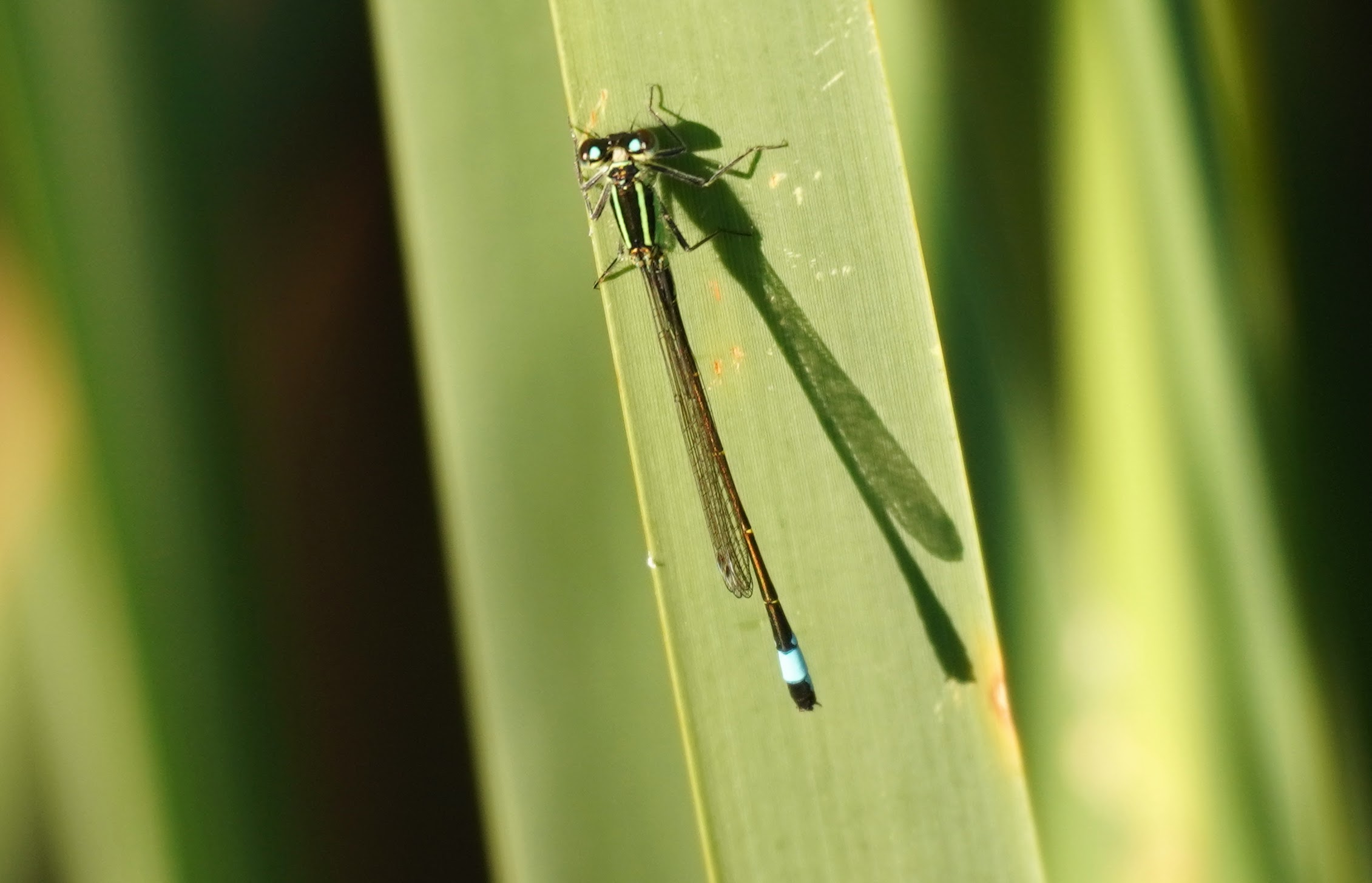
Various insects around. I think that this is a Hairy Dragonfly near the 13th tee Blue, well camouflaged amidst the undergrowth. The Emperor dragonfly was rather more conspicuous with early-morning due on its large wings. The Common Blue Damselfly was near the 3rd on the Red, but they are fairly common on the Blue and Red course
Hairy Dragonfly Brachytron pratense [13th Blue]
Emperor Dragonfly Anax imperator [1st Blue]
Common Blue Damselfly Enallagma cyathigerum [3rd Red]
This Large Skipper looks more like a moth, but is actually a butterfly. This is a male - sitting on a leaf waiting for a female on the 4th Red.
Large Skipper Ochlodes sylvanus [4th Red]
The Southern Marsh Orchids are in full bloom just short of the pond on the 9th Red. There are also some Common Spotted here as well and Early Marsh Orchids as well if you have time to search.
Spent a fair amout of time at Frilford in the sunshine today. There was plenty of birdsong. I saw or heard five species of warbler - Willow Warbler, Chiffchaff, Whitethroat, Blackcap and Garden Warbler. Whitethroat and Garden Warbler were singing in the same tree on the right of the 13th Red.
Garden Warbler [13th Red]
Whitethroat [13th Red]
Chiffchaff [8th Blue]
The pond was busy with birds on the 3rd Blue. Moorhen, Tufted Duck and Little Grebe were on the water, with a Grey Heron standing watch.
Grey Heron, Tufted Duck, Little Grebe, Moorhen [4th Blue]
It was good to see a pair of Spotted Flycatchers back on the 8th Blue and a Hobby flying past swiftly as well.
Spotted Flycatcher [8th Blue]
Near the 1st tee on the Red there were two Collard Doves on the telegraph wires. They are common everywhere else, but I don't see them at Frilford very often.
Collard Dove [1st Red]
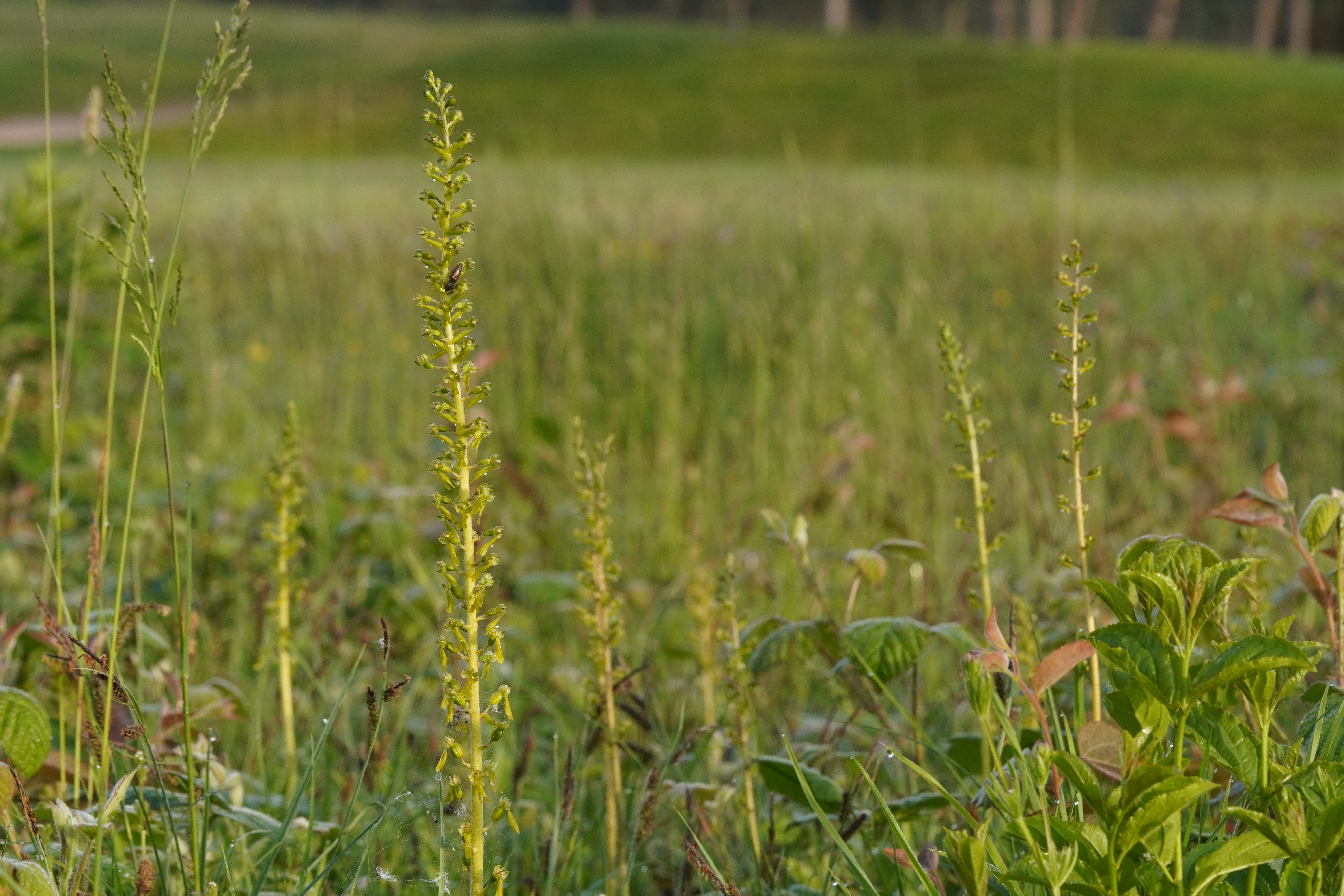
More species of Orchid are starting to appear. There is a good patch of Common Twayblade to the left of the 3rd fairway on the Green and some Southern Marsh Orchids nearby.
In Two-pine Fen one Early Purple Orchid is still out and the Common Spotted Orchids are just coming into flower. There are also a lot of Marsh Orchids. These are very difficult to differentiate, but I think that this photo is a Narrow-leaved Marsh Orchid.
Played the front nine of the Red this evening. I've not noticed the large patch of Marsh Orchids short of the pond on the 9th before - to be fair my tee shot does usually carry them. These look like Southern Marsh (with a few Common Spotted mixed in - you can see a couple in the top left).
The Southern Marsh Orchids are not as large as the ones on the 11th Blue, but you can distinguish them from the Common Spotted as they are generally darker purple - but more reliably by the shape of the flower. Common Spotted Orchids have three distinct parts to the lower lobe, fairly evenly proportioned, whereas Southern Marsh tend to have more of a one-part lower lobe. Pyramidal Orchids have 3 evenly proportioned parts to the lower lobe without patterns on the flowers.
Common Spotted
Southern Marsh
Pyramidal
Away from Orchids I found a Hedge Woundwort in a couple of places - this one beside the path on the 4th Green.
In amongst the thick rough there are a few different species of thistle - providing extra incentive to keep the ball on the fairway, particularly if wearing shorts or a skirt. Musk thistle is the one that has large nodding flower heads.
Musk Thistle Carduus nutans [12th Blue]
Welted thistle has smaller flowers and branched stems and lots of spiny wings all the way up the stem.
Welted Thistle Carduus crispus [15th Blue]
Marsh thistle has unbranched stems and a cluster of flowers at the top.
Marsh Thistle Cirsium palustre [4th Green]
Meadow Thistle is friendlier and has no harsh spines and a single flower on a long stalk. You can see this growing in the fen around the 4th Green/16th Red.
Prime time of year for flowers. Some of the most spectacular on the course at the moment are the Southern Marsh Orchids between the 8th and 11th on the Blue. These are around 50cm tall and very visible from the fairway on the 11th - there are actually a couple of clusters. It is unusual for them to have spotted leaves - possibly due to hybridising with Common Spotted.
There is another type of orchid nearby, the Pyramidal Orchid. Somewhat smaller and just coming into flower. You will see lots of these if you visit Goring and Streatley Golf Club.
A couple of quite similar flowers growing near the 1st green on the Red. Weld is a tall plant growing up to 6 feet high if it can avoid the mower. Wild Mignonette is shorter and bushier.
Weld Reseda luteola [1st Red]
Wild Mignonette Reseda lutea [1st Red]
We are also nearing peak clover season. White Clover is the most common and is the one that conceals your golf ball even when it's only just off the fairway.
White Clover Trifolium repens [15th Blue]
Red Clover is also fairly common in wet areas. This one was in the fen on the 3rd Blue.
Red Clover Trifolium pratense [3rd Blue]
If you look closely, you may also spot Knotted clover, which grows on the 12th on the Blue.
Knotted Clover Trifolium striatum [12th Blue]
Hare's-foot Clover is also common on the 11th of the Blue and the Doghouse range in particular.